Running organisations
Trapped in your own business
I spent two weeks in Taiwan watching breakfast shop owners work themselves to the bone — and resent every second of it. It made me think about the trap most business owners never see coming.
Victoria Englert
|
|
7
min read
I just came back from a 2-week holiday in Taiwan, and something stuck with me.
I kept walking past breakfast shops (早餐店) — the kind that open before dawn, every single day, no holidays. Fluorescent lights flickering at 5am. Grimy countertops. Peeling signage that hasn't been touched in twenty years. These shop fronts have seen better decades, and nobody seems to care enough to change that.
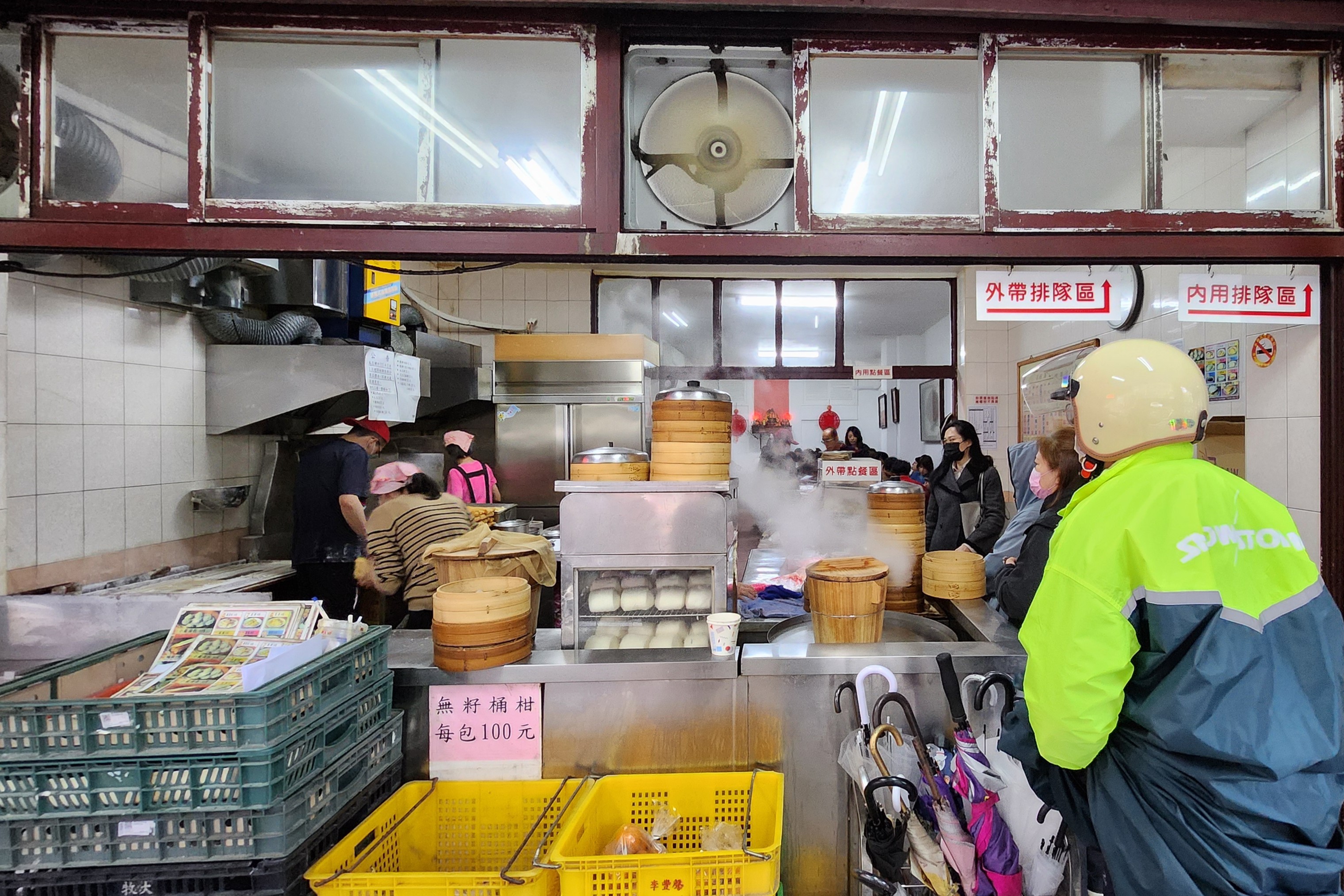
The owners weren't just tired. They moved through their work like people serving a sentence. Mechanical, joyless, closed off. No eye contact with customers. No warmth. Just hands working on autopilot — flipping egg crepes, pouring soy milk — while everything else in them had already checked out. And it didn't matter if there was a queue out the door. Busy didn't mean happy. If anything, busier just meant more trapped.
These weren't lazy people. They were some of the hardest working people I've ever seen.
But they were miserable.
And I think I know why.
They built a job for themselves — and called it a business.
Michael Gerber calls this the E-Myth trap: most people who start a business aren't entrepreneurs, they're technicians who had an idea. The breakfast shop owner knows how to make egg crepes, so he opens a breakfast shop. But knowing how to do the work and knowing how to run the business are two completely different skills.
So he ends up working in the business, not on it. Every day, all day, forever. No systems. No exit. No vision.
And then comes the resentment.
The real question every business owner needs to ask is: if I stepped away tomorrow, would this business survive?
If the answer is no — you don't own a business. You own a job. And eventually, that job will own you.
Looking at these people — and knowing people who built a similar trap for themselves — makes my heart ache. There is a way out, if only they see it too.
It's not too late to change the way you think about it. But it starts with the mindset shift: from operator to owner.
Why the mindset shift is harder than it sounds
Here's the uncomfortable truth: most operators already know this in one way or another. They've heard the advice. Work on the business, not in it. Delegate. Build systems. Step back.
And yet they don't. Or can't.
It's not laziness. It's identity.
During the same trip, I had a conversation with a cousin of mine. Her family runs their own small business, which often requires strenuous physical labour. They work brutally hard, no holidays, no real separation between work and life.
“I don’t want my son to inherit the business. Putting the nature of the work aside, not being able to take days off is not great for family life.” She said.
When I asked her what was stopping her from hiring someone to take some of the load off, she was clear: "They won't do it with the same care we do. And the cost isn't worth it for the quality you get."
It sounds perfectly rational. And honestly, it is — up to a point. Margins are thin. Hires are expensive relative to output. Quality is hard to transfer. Training takes time nobody has. And underneath all of it, something nobody says out loud: they wouldn't know what to do with all that time anyway. The business has become the structure of their life, not just their livelihood.
Our conversation ended there. But I don’t think this should be the end of the story.
Most business books on this topic would offer some variation of this advice:
“Document your processes. Systemize everything. Scale it so it runs without you.”
But it’s clear to me that my cousin’s family are proud of what they do and the quality of their output is tied deeply to their identity. They want to be in the business.
Besides, there are some realistic constraints. It’s not likely that they will quickly find another source of income (it’s hard for anyone with skillsets that are limited in transferability); they are also not going to suddenly become business gurus.
All they are looking for is to have some room to breathe.
So if we work this backwards, the target would become something like:
“How can we be away for 14 days at a stretch without the business collapsing or the customers noticing a major drop?”
This lowers the bar quite dramatically, doesn’t it?
What needs to happen to get that 14-day holiday
If you are a small business owner, and finding yourself cry-laughing at the idea of getting 14-days as a holiday, you are in for some good news:
What you need doesn't require some big business transformation. You just need to make the business survive imperfect conditions for a short window.
Here's how I'd think about it.
1. You don’t need “great people” — you need good enough for a short window
The first shift is in how you evaluate people. Right now, the bar for hiring is essentially "find someone as good as me" — same care, same speed, same consistency. That's an almost impossible standard, and of course nobody meets it. But that's not actually the bar you need to clear.
For a two-week window, customers can tolerate slight inconsistency. The business just needs to function, not excel.
Some regulars might even accept reduced hours or a limited menu. The question isn't "can this person replace me?" It's "can this person keep things from falling apart for 14 days?" That's a very different — and much more solvable — problem.
2. Reduce variability instead of increasing talent
The second lever isn't better people. It's less room for variation. If quality depends entirely on skill and judgement, you're stuck, because you can't transfer skill quickly. But you can reduce how much skill is required in the first place.
Using breakfast shops as an example, this could look like a smaller menu during absence periods, pre-prepped ingredients, standardised portions and steps. Simple "if X happens, do Y" rules written down somewhere.
In a service business, the equivalent might be a reduced client roster during that window, or templated responses for the most common requests.
You're not trying to make the business perfect in your absence — you're trying to make it predictable enough that someone else can hold the line.
3. Introduce temporary redundancy, not permanent overhead
Full-time staff isn't the only option. Part-time workers trained gradually over time, a family member or friend who can step in occasionally, a rotating helper who already knows the basics — these are forms of backup capacity, not a full second team. Cheaper, lower commitment, and actually aligned with the real goal, which is occasional relief, not permanent delegation.
4. Train in small, low-risk slices
Training also feels impossible when you're already stretched thin — it slows you down, mistakes cost money, there's no buffer. So nothing changes.
But training doesn't have to be a big project. An hour or two during off-peak with someone handling one task — drinks only, say, or washing up — gradually expanded over weeks. Small, low-risk slices that build capability without the all-or-nothing leap.
5. Pre-commit to a “lower standard window”
The last piece is the one most people resist, and also the most necessary: explicitly deciding in advance that for these ten to fourteen days, you will accept slightly slower service, a limited menu, and the occasional mistake.
This sounds obvious, but it really isn't. Without that pre-commitment, most owners step back in at the first sign of imperfection — which defeats the entire point.
This is less about operations and more about expectation-setting, with yourself first, and possibly with your customers. You need to give yourself permission to be imperfect.
None of this is a revolution. It's a resilience upgrade — taking a system that only works when everything is perfect, and giving it just enough slack to survive when it isn't. And sometimes, that's all people actually need.
The real cost of staying stuck
Here's what I keep coming back to: most people who are stuck don't stay stuck because they're not smart enough to figure it out. They stay stuck because the cost of changing feels higher than the cost of continuing.
And for as long as that feels true, nothing will shift.
But the cost of continuing isn't free. It's paid in holidays not taken, in a son who watches his parents disappear into work and quietly decides he wants nothing to do with it, in a body that has no recovery time, in a life that gets smaller every year instead of larger.
The trap isn't the business. The trap is the belief that there's no other way to run it.
This is true whether you're running a breakfast shop or a ten-person consulting firm. The shape of the trap changes. The psychology doesn't.
Most small business owners I work with aren't looking for a dramatic reinvention. They're looking for exactly what my cousin described — some room to breathe. A system that doesn't collapse the moment they step away. The ability to take a fortnight off without their phone blowing up.
That's not a big ask. But it usually requires someone to look at the structure of how the business actually runs (not the version that exists in the owner's head, but the real one), and help them find where the leverage is.
If you recognised yourself in any of this, I'd love to hear where you're at. What does your version of "no holidays, no exit" look like? Drop me a message — sometimes just having someone to talk about this to already helps.

Thank you for reading!
If you enjoyed the article and would like to buy me a nice cup of cappucino,
👉 support me on Ko-fi
How to export and self-host your Webstudio site with a Wordpress headless CMS
Should you use Webstudio? Confessions from a Webflow junkie
Why New Year’s Resolutions Rarely Work — and What Does Instead
How to Register as an Einzelnunternehmer in Germany: A Practical Guide for Solopreneurs / Freelancers
Useful Resources for Aspiring Pigeon Rescuers
What “Ask and It Is Given” Taught Me About Emotional Regulation
Trapped in your own business
I Replaced Notion With My Own AI CRM. Here's My Process.
“Help! Why can’t I get anything done?” — A letter from a small business owner
The REAL Reasons Your Project Management Tool Failed